When I think about layers, the first thing that comes to mind is an onion. An onion is built layer by layer, each one with its own purpose, and so is data.
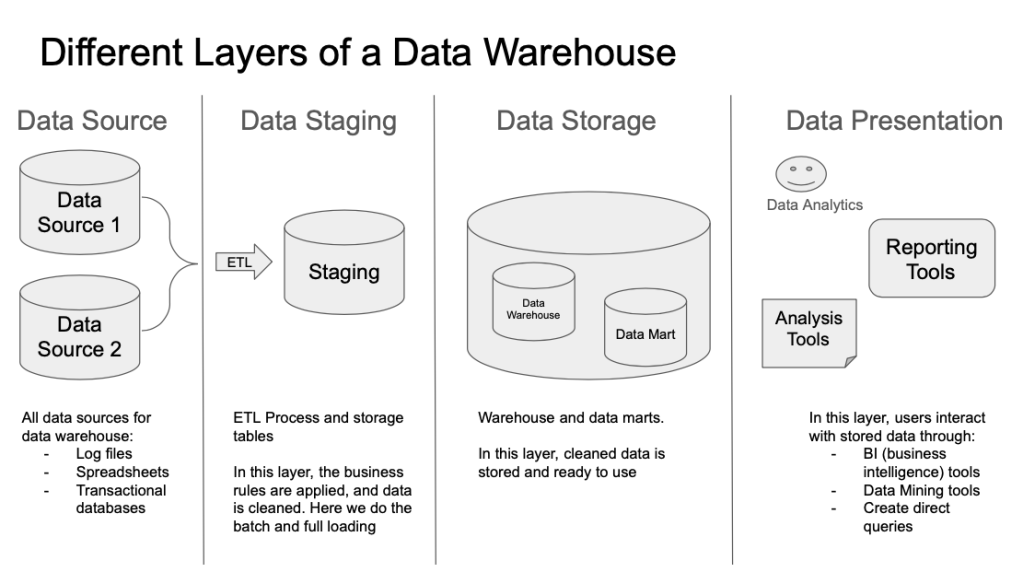
The outermost layer of an onion is the one we peel off first. It’s been exposed to the environment, handled by different people, and is often dry or damaged. We discard it because it’s not clean or usable. In the world of data, this is like the data source layer. It’s raw, unfiltered, and while it holds value, it can’t be consumed directly. It needs to be cleaned and prepared before it’s useful.
The next layers, the ones just beneath the surface, are fresher and more usable. Some are crisp, great for salsa or salads; others are softer and better suited for cooking. This represents the staging layer of data. Here, raw data is cleaned, transformed, and prepared for further use. This is where the ETL (Extract, Transform, Load) process takes place. We extract the data from the source, transform it based on business logic, and load it into the next layer.
Moving deeper, we reach the storage layer, where the onion is now cut into usable forms: rings, slices, or diced pieces, ready to be added to a dish. Similarly, in this layer, data is organized and stored in a way that aligns with business needs. It’s clean, structured, and ready for users to access and work with.
Finally, we reach the presentation layer, this is the part of the onion already on your plate, part of a finished meal. It’s ready to be enjoyed. In the data world, this is where data is visualized and presented through dashboards, reports, or tools that make it easy for users to draw insights and make decisions.
In summary, data layers are like an onion. You don’t just bite into an onion whole, you peel it, prep it, and use each layer appropriately. Likewise, to truly make the most of data, we need to understand its layers: how they’re structured, how they interact, and how to process each one effectively. The better we understand this, the more value we can extract from our data, and the better we can use our resources.
 Daniela Fernandez